Family-run local service · Genuine work photographs · Honest advice
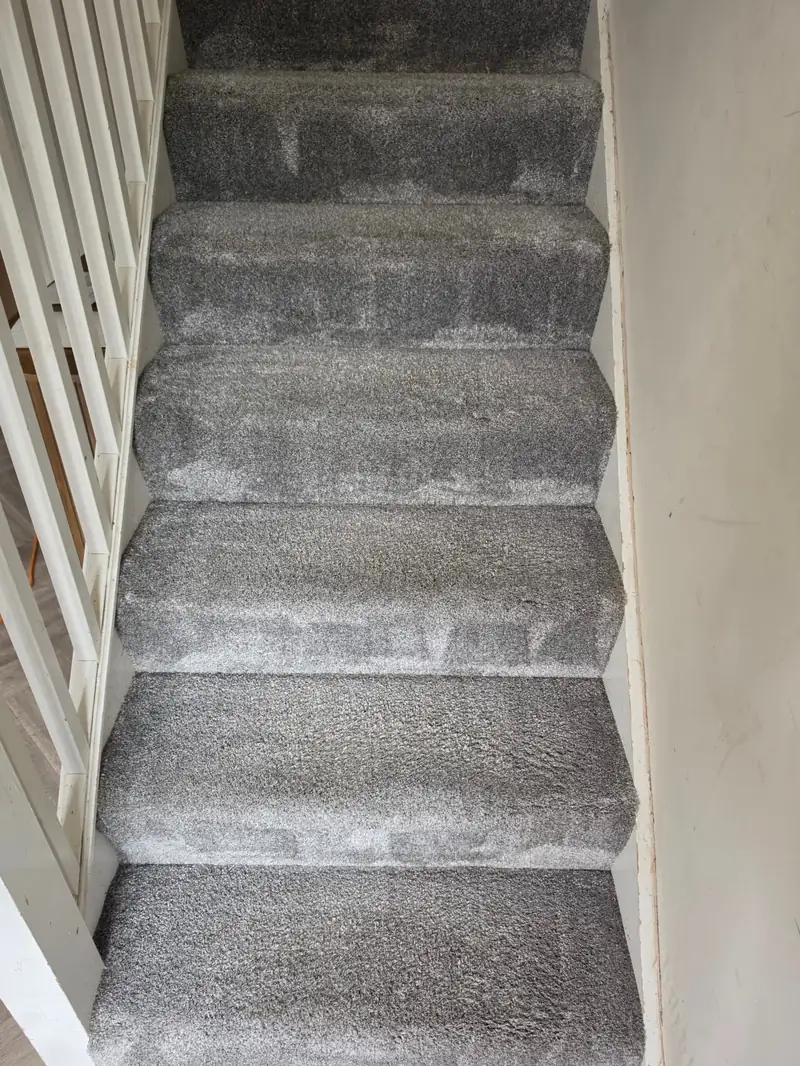
Does your stair carpet look darker and more worn than the rooms upstairs? You’re not imagining it. Staircases are among the most heavily used carpeted areas in many homes, and dirt builds up in places that ordinary vacuuming can struggle to reach.
Here’s why that happens, what you can safely do yourself and what to expect from professional stair carpet cleaning.
Quick takeaway: Regular vacuuming helps, but stair nosings, edges and the repeated walking line often need particular attention. Deep cleaning can remove built-up soil; it cannot reverse permanent wear.
Stairs usually take more concentrated wear than most areas of a home. People step on the same narrow part of each tread every day, often carrying grit, dust and soil from hallways and outside. Over time, the fibres can look darker, flatter or more uneven than the surrounding landing carpet.
That doesn’t always mean the carpet needs replacing. Sometimes a professional clean can remove built-up soil and improve its appearance significantly. However, cleaning cannot reverse permanent fibre wear or colour loss.
Unlike a lounge, where footsteps are spread across a wide floor, stair traffic tends to follow the same line. Soil gradually collects where shoes and feet land most often.
The corners, edges and curved front of each step can trap dust and fine particles. These details are easy to miss with a standard upright vacuum cleaner.
Repeated pressure can flatten the pile. A dark-looking strip may be a mixture of dirt, shading and wear. Proper cleaning can remove soil but won’t always restore the original pile direction or texture.
Food spills, muddy paws and accidental pet contamination can leave marks or odours. Correct treatment depends on what caused the issue and whether the contamination has penetrated the carpet backing.
Too much cleaning product or excessive water may leave residue, encourage rapid re-soiling or keep the carpet damp for longer than necessary. Stair carpets should be treated with controlled moisture.
Regular maintenance is the best starting point. You don’t need to soak the carpet or use strong chemicals to keep it looking presentable.
If a stain keeps returning after treatment, it may be caused by residue or contamination beneath the surface. Our guide to why carpet stains come back after cleaning explains the difference.
Professional stair carpet cleaning is more involved than running an extraction machine over the middle of each step. The exact method depends on the fibres, carpet construction and the condition of the staircase.
We look at the carpet type, existing stains, wear and any areas needing extra care. Dry soil removal is important before applying moisture.
An appropriate pre-spray is applied where needed to help break down embedded soiling. Different stains and fibres may require different products.
Careful agitation can help cleaning solution reach the fibres, including awkward areas such as nosings and edges. This must be suited to the carpet to avoid damage.
Where appropriate, professional hot water extraction removes suspended soil and used cleaning solution. Smaller stair tools allow more control over the treads and risers. The aim is effective cleaning without unnecessary saturation.
What a cleaner should not promise: every stain disappearing, flattened pile becoming new again, or permanent wear being reversed. A good assessment sets realistic expectations.
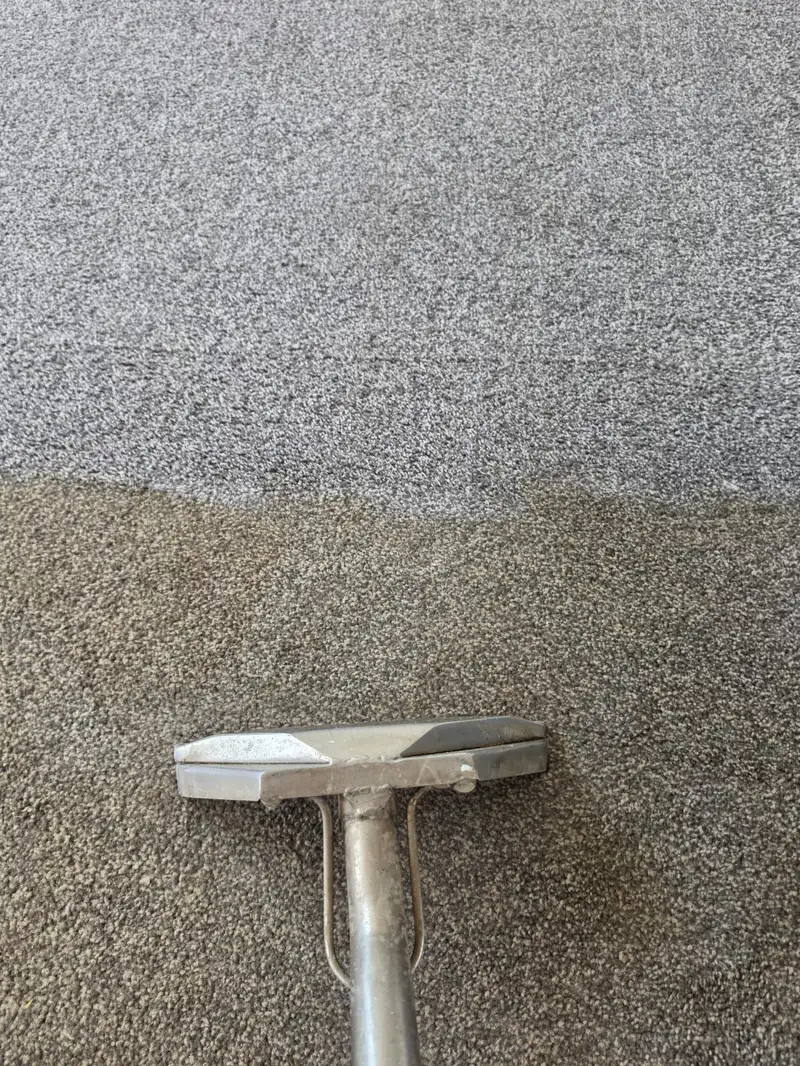
As a general guide, professional-cleaned carpets may take around 4–12 hours to dry. That is an estimate, not a guarantee. Fibre type, moisture used, airflow, room temperature and humidity all affect the result.
Keep the staircase ventilated where possible and follow your cleaner’s advice before using it normally. Damp stairs can be slippery, so take particular care with children, pets and footwear while the carpet is drying.
Consider a professional clean if the steps look noticeably darker than the landing, vacuuming no longer improves the appearance, there are lingering odours or a stain needs specialist assessment. Homes with children, pets or frequent visitors may need more attention than lightly used staircases.
There is no one timetable that fits every household. If you’re unsure, read our guide to how often carpets should be professionally cleaned.
Often they can improve substantially, particularly when the issue is embedded soil rather than permanent wear. Results depend on fibre condition and staining; no responsible cleaner should guarantee a like-new finish.
Many people use ‘steam cleaning’ to describe professional hot water extraction. Suitability depends on carpet construction and fibre type, and a technician should assess this first.
Follow the cleaner’s instructions. Limited careful access may be possible in some cases, but the stairs can be slippery while damp. Avoid dirty footwear, rushing or carrying bulky items until they are safe and dry.
Pricing varies with the number of steps, landings, level of soiling and specialist treatments required. See our guide to carpet cleaning prices in Pontefract or request a quote for your staircase.
New Life Carpet – Carpet Cleaning Service provides professional carpet cleaning for stairs, landings and rooms in Pontefract (WF8), Castleford (WF10), Wakefield and surrounding West Yorkshire areas. We also serve parts of Leeds, Doncaster and Selby by arrangement.
Send us a few clear photos of your staircase and let us know how many steps or landings need cleaning. We can discuss a suitable approach and provide a no-obligation quotation.
Call or WhatsApp: 07939 205695. You can also contact us through the website.
READY FOR CLEANER STAIRS?
Or call 07939 205695
We use necessary cookies to run this website. With your permission, Google Ads can use cookies and device information to measure enquiries from adverts and personalise advertising. You can use our quote form with either choice.
Change your mind any time using Cookie settings in the footer. Privacy and cookie details.
Necessary cookies: always on. These support the site and remember your choice for 180 days.
Allow advertising measurement and personalised advertising. Off until you agree. Withdrawing consent reloads this page to stop the Google tag.