10 November 2026 · New Life Carpet · Pontefract and nearby areas
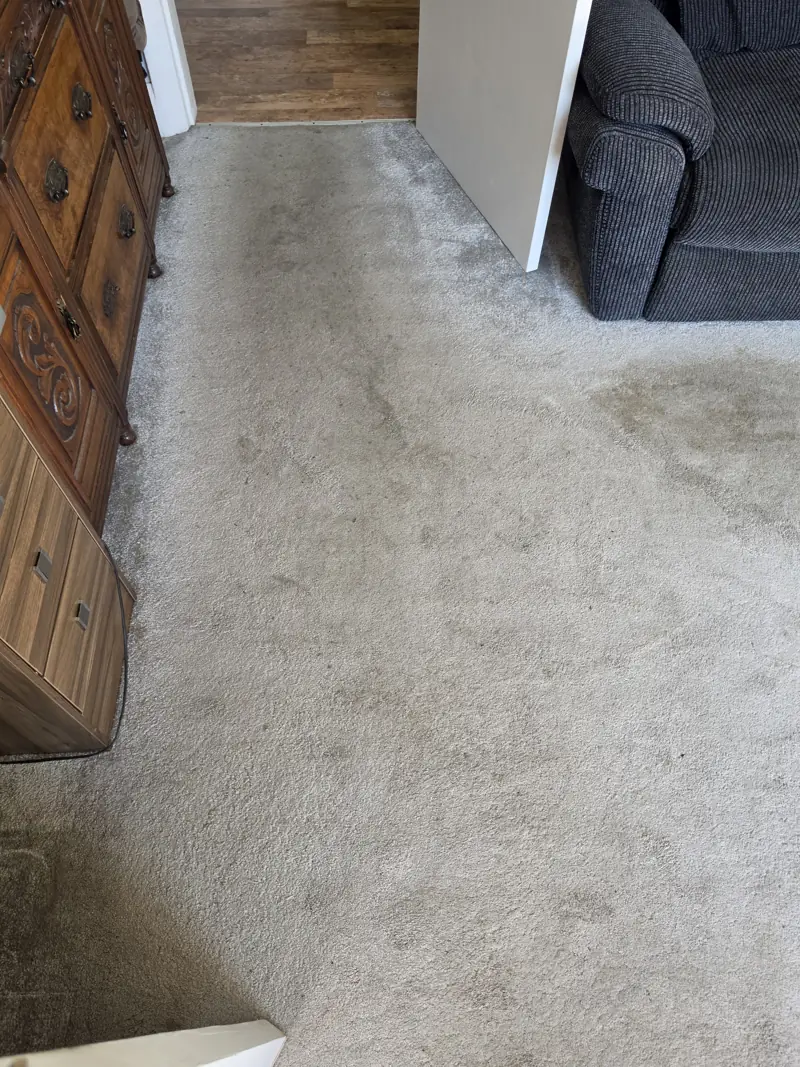
A carpet stain remover can make a mark worse if the product is unsuitable, too much is applied or the area is scrubbed. The right treatment depends on the carpet as well as the spill. A bottle that worked elsewhere in your home is not automatically suitable for every room.
At New Life Carpet, we would rather know what happened before another treatment is tried. If you are in Pontefract, Castleford, Wakefield or nearby, send us a clear photo and the name of any product you have used. These details help us discuss whether an assessment or professional clean is the sensible next step.
The IICRC’s carpet care guidance identifies several possible problems with consumer spot removers, including sticky residue, colour loss, yellowing and changes in texture. That does not mean every stain remover causes damage; it means the product and its instructions need to suit the carpet.
Appearance alone cannot confirm the cause. If a mark disappears and later returns, our separate guide explains why carpet stains come back after cleaning.
Start with the carpet manufacturer’s care instructions and the product label. Check the permitted fibres, dilution, application method and any rinsing instructions. If the carpet material is unknown, do not assume it is a standard synthetic carpet.
The National Carpet Cleaners Association’s spot-cleaning advice recommends testing in an inconspicuous area because a product that works on one carpet can damage another. Follow the product’s test procedure and check the result before treating the visible mark. A test is a precaution, not a reason to ignore a manufacturer’s restriction.
For wool, see our guide to professional wool carpet cleaning. For sensitive fibres such as viscose or sisal, seek advice before adding moisture: WoolSafe’s fine-fibre guidance highlights their particular sensitivity to water and cleaning chemistry.
Carefully lift loose solids, then blot liquid with a clean, absorbent white cloth. Work gently rather than scrubbing. The NCCA advises against drenching a carpet or using bleach as a general spot treatment.
If a suitable product is permitted by your carpet’s care instructions, use it exactly as directed. Resist the temptation to keep adding more when the first attempt does not work. WoolSafe advises against household washing-up liquid and other products not intended for carpets because they can leave sticky residues.
Do not combine different cleaners or improvise a stronger mixture. If you cannot establish what the carpet is or which treatment is suitable, stop at careful blotting and ask for advice.
Stop applying further treatments. Keep the bottle or photograph its front and back labels, including the ingredients and directions. Write down roughly how much you used, whether it was diluted and whether you rubbed, rinsed or used a machine afterwards.
Take one close photo and one wider photo in daylight. Tell us what was spilled, when it happened and how the mark changed. A lighter patch, a darker ring and a sticky area are useful observations; none is a reliable diagnosis from a photograph alone.
Avoid hiding the history of the mark out of embarrassment. Knowing what has already been used helps us assess it and explain the limits of further cleaning.
It depends on what has happened. Removable residue or soiling is different from lost colour or physical changes to the fibres. We can discuss suitable cleaning after assessment, but cannot promise that every treated patch will disappear.
If you are deciding whether a damaged area is worth cleaning, our clean-or-replace guide sets out the practical questions to consider. Tell us whether you want attention to one mark or a whole-room clean, as those are different scopes of work.
For carpet-cleaning enquiries in Pontefract, Castleford, Wakefield and nearby areas, include your postcode, the room involved, photos of the mark and details of any products already applied. If you have a carpet label or care sheet, send that too.
Request a cleaning quote or text us on 07939 205695. Let us know your main concern so we can discuss the carpet, the proposed work and realistic expectations before a visit.
LET’S PLAN YOUR CLEAN
Or call 07939 205695
We use necessary cookies to run this website. With your permission, Google Ads can use cookies and device information to measure enquiries from adverts and personalise advertising. You can use our quote form with either choice.
Change your mind any time using Cookie settings in the footer. Privacy and cookie details.
Necessary cookies: always on. These support the site and remember your choice for 180 days.
Allow advertising measurement and personalised advertising. Off until you agree. Withdrawing consent reloads this page to stop the Google tag.